
GRANDPARENTS AS PARENTS: A grassroots effort resulted in the founding of Grandparents as Parents (GAP) to help create brighter futures for the children in their care
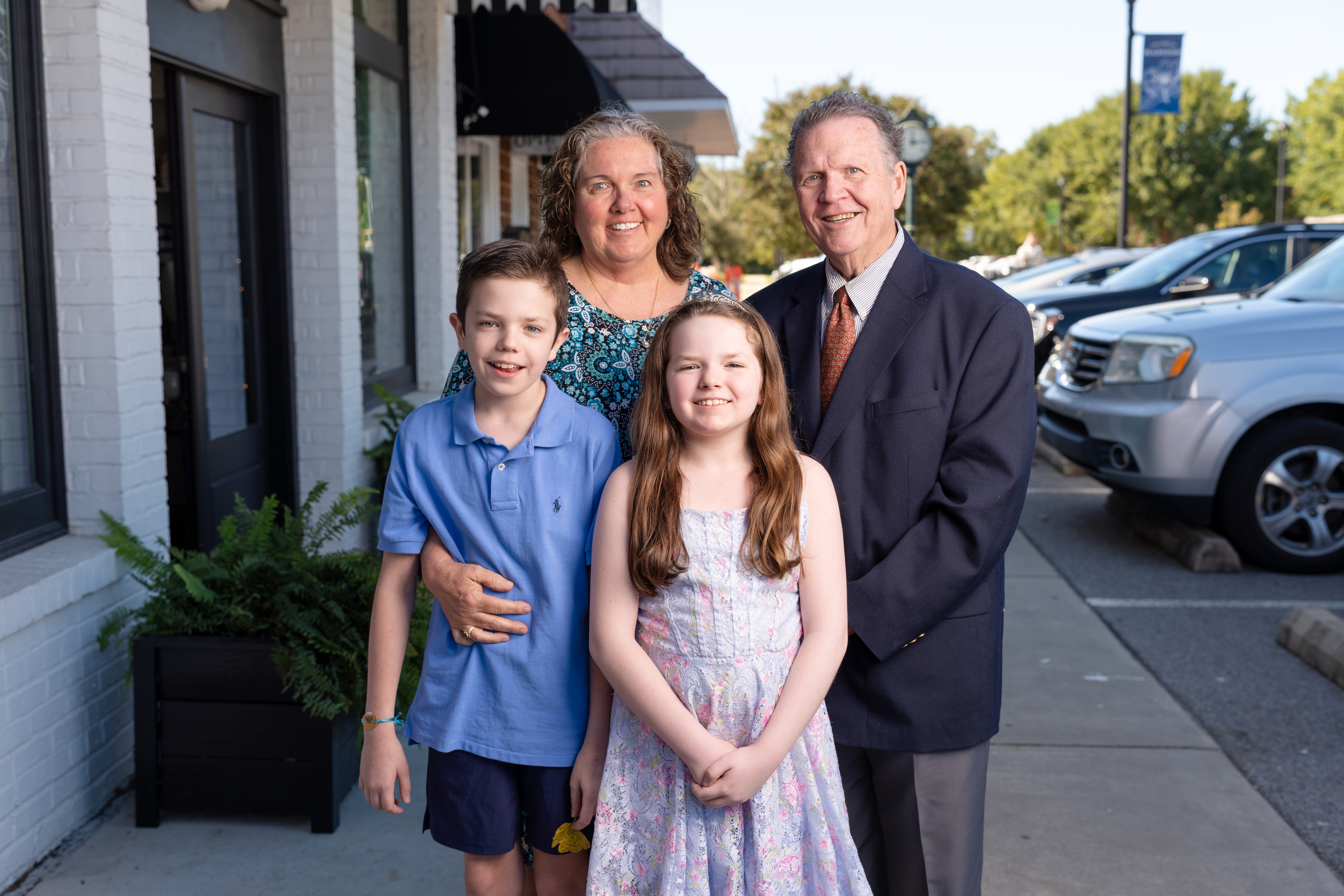
BY ERIN COGGINS | PHOTOS BY JOSHUA BERRY | LIVING 50 PLUS
Eight years ago, a little girl, born with drugs in her system, slept restlessly in a warm, monitored incubator. Just three years before, her brother was in the same environment. The only difference was that his blood contained what doctors referred to as “a plethora of drugs.”
Heartbroken in seeing the same scenario play out with his granddaughter, Keith Lowhorne could not bring himself to visit his newborn granddaughter in the hospital. He had been there. He had done that. And he cried from the moment he entered the NICU to the time he walked out of the room.
This time would be different.
“He didn’t want to get attached only to have her yanked away and not be able to see her. But she came straight home from the hospital with me,” Keith’s wife, Edie Lowhorne, said. “When we walked in the door, I took her out of her car seat and walked over and handed her to him, and that was it. He cried for an hour, and now she’s his little princess.”
Keith and Edie adopted their granddaughter, Harper, and their grandson, Kiran. They become one of approximately 60,000 north Alabama families raising a grandchild or a relative.
“I had retired after 43 years in the TV business. I knew people, but I could not find anybody to help us in this new situation we found ourselves in,” Keith said. “People knew of someone raising a grandchild, but they could not put two and two together. So, we knew that we had to start a grassroots effort.”
That grassroots effort resulted in the founding of Grandparents as Parents, a non-profit organization through compassionate advocacy, essential resources, and emotional support, seeks to strengthen families and help create brighter futures for the children in their care.
“We picked up during COVID when grandparents would tell another grandparent, and then another grandparent. Because our grandparents could not go to the grocery stores, and schools were not in session, they had kids 24/7,” Keith said. “They did not know how to use the internet in some cases, and they really did not know how to do the learning lessons. Since we were not really up and running, I reached out to a friend of mine who has a non-profit to request help with food. We had enough food for about 25 families.”
The operation grew and grew, and now in 2025, GAP has helped 56,000 families by supplying food, school supplies, clothing, household goods and books. GAP has been a 501c organization for 18 months.
“There’s not a day that goes by that we do not get a phone call about a grandparent or relative who’s taking care of a kid,” Keith said. “We like to use the word grandfamilies. That’s the term that the government has put on any relative who is raising a child or a family member. So, this could be a brother, sister, cousin, aunt, uncle, a step-grandparent, or a stepparent.”
Keeping families together is the top priority for GAP. Dealing with mental health is just one of the reasons Keith and Edie see the vital importance of this goal. Their grandson still battles the trauma he experienced in his early years, attending therapy 20 hours per week.
“These kids have so much mental health trauma, and it is important for them to stay with their family and get the proper support they need. I would say 99.9 % of these kids have trauma in their lives.” Keith said. “Then there is family culture. Families have certain activities they do on specific days and times, which should continue with the child as well. We also want to keep siblings together. We want them to be a part of the family they belong to, the blood relatives in most cases.”
The holiday season is an integral part of the family unit. During COVID, grandparents expressed that they could barely afford food, much less Christmas gifts, so Edie created the Christmas for Kin program. They provided gifts for 117 children in the first year, 200 in the second year, 300 in the third year, and have set the goal for 400 kids this year.
“I didn’t have a big Christmas growing up, so when I had children, I wanted my children to have what I did not have,” Edie said. “When people started asking, I felt like these kids deserve everything. I started taking Christmas lists and finding people to sponsor them.”
The process is simple. Sponsors purchase the gifts on the child’s list and deliver the items to the GAP office. If sponsors do not wish to purchase gifts, they can donate monetarily. They encourage sponsors to avoid purchasing generic items like a Dollar Tree Barbie. Instead, they ask that sponsors shop for these kids as they would for their own children.
“If a child doesn’t get everything on their list, we use the monetary donations to fill in,” Edie said. “It’s just a wonderful feeling because these grandparents send us pictures and stories on Christmas morning. To see the smiles on these kids’ faces or hear them yelling as they come down the stairs and see their gifts is just really heartwarming.”
Just as Keith and Edie provide assistance to struggling grandparents, they also understand the importance of accepting help. When starting GAP, the Lowhornes operated out of their home. Their neighbors were accepting of the constantly parked cars on the streets and even chipped in to help. But to properly serve all the needs, they needed space.
Enter Michael Clark, a friend of Edie’s and owner of the Dance Factor. Clark was outgrowing his dance studio, and Edie encouraged him to seek a larger space she had found on Highway 72, which had been empty for six or seven years. With Edie by his side, Clark found his studio’s new home.
“The building was musty, smelly, and had spider webs. But when we walked in, we noticed the big chandelier hanging in the front, and the perfect glass mirror for parents to see their children dancing,” Edie said. “We walked through, and imagined every inch of this building being painted, steam cleaned and fumigated.”
As the tour continued, the landlord opened a door that revealed another large space. Clark exclaimed, “I don’t need this much space.”
“He pulled me to the side and said, ‘If I take this building, it is more than I need. How about you guys take this side for GAP?” Edie said. “We both just started crying. It wasn’t planned. It was just one of those snaps and your life changes moments.”
The new, large, permanent space allows families to come in person for fellowship or to have questions answered face-to-face regarding financial help, managing insurance, seeking legal help, and even adoption advice.
“We’ve been through the same things. We have navigated the court system, the legal system, and we have had an assigned social worker,” Keith said. “We also have experience in therapies, so we can help get them in the right direction on many things.”
When Keith did not know the answer, he researched until he found them. This led him to connect with the non-profit Generations United, and eventually, he was named the Grand Voice for the state of Alabama. The Lowhornes were named the 2024 Casey Family Foundation for Kinship Family of the Year and were nominated and won the Angels of Adoption award.
Putting his organization out there has earned Keith and Edie recognition that helps promote the mission of GAP. Keith currently chairs the Federal Advisory Council for Grandparents Supporting Grandchildren and often travels to Washington, D.C., to collaborate on issues affecting grandparents as parents.
Through his involvement outside of the GAP, Keith has managed to secure much-needed government funds for grandparents. One example is the 2024 distribution of the opioid settlement money.
“Opioid addiction plays a major role in grandparents raising grandchildren. That’s my main focus right now because grandparents are taking care of the brunt of this problem,” Keith said. “Last year, Huntsville received $90,000 to distribute. We are trying something new. And GAP is getting results.”
Besides working with the federal and state governments, GAP also plans to work with local schools to establish a way for grandparents to fellowship after school drop-offs. But more importantly, consider changing the verbiage used, especially regarding school events.
“One of the things we’re trying to change in the public school system is the naming of events like ‘donuts with dad’ or ‘muffins with mom.’ Why can’t it just be with your grown-up? There are other ways to phrase those events to be more inclusive of these kids being raised by grandparents,” Keith said. “My grandson, our son, knowing that I was his dad now, would come home and hand me the donuts with Dad’s invitation and say, ‘A lot of kids don’t have dads. That’s not fair.”
Despite the significant growth, GAP must meet the needs of the ever-growing grandparents-as-parents population, and Keith and Edie are devoted to this service. They hope to grow the organization financially so that they can one day hire a full-time executive director. In the meantime, they will take in every moment of the thank-you notes and gratitude they receive from the families they help.
“We recently had 150 of our grandparents and grandchildren out to Toyota Field for a ballgame. Some had never been to a baseball game, much less a stadium,” Keith said. “It was a fun day. We received a thank-you note a few days later. We get just as much out of our grandfamilies as they do out of us. The bottom line is we can help you, and you can help us. It’s really that simple. If you have a need, we are here to try to find a way to help you.”